

Some months you ship. Some months life calls and you pick up the phone.
February was family. No launches, no content, no socials. Just the stuff that matters more than any dashboard.
March was the comeback. Three speeches rescheduled. Two products back on track. One new product coming. One post long overdue.
I missed this. Writing, sharing, thinking out loud with you. So let me catch you up on everything, and then I want to ask you something.
What’s on My Desk
Anapana
The numbers tell the story better than I can.
Over the past few months, we’ve been quietly improving every step of the user journey. Guided meditations, personalized paths, Google and Apple sign-in, a redesigned onboarding, pricing experiments, funnel optimization, win-back strategies.
No single feature drove the results. It was dozens of small, intentional decisions stacking up over time.
Here’s where the funnel sits today:
Trial Start Rate: 15% (market median: 6.92%)
Trial to Paid: 55% (market median: 37%)
Download to Paid: 8% (market median: 2.8%)
6-Month Retention: 50% (market median: 18%)
Market medians per RevenueCat industry data.
I had to read those numbers twice when I first pulled them together. Every metric is well above market. Not because we did one clever thing, but because we kept doing small things well.
That’s the lesson I keep relearning: product work compounds. You don’t feel it week by week. Then one day you look at the dashboard and the curve has changed shape.
Revenue remains private (it’s a shared project), but I’ll say this: Anapana is going well.
If you’re curious to try it, the app is available on iPhone and Android. It’s in Italian for now. I created an offer only for you, just open this link.
Coco
Coco launched on February 22nd, about a month late. The delay wasn’t ideal, but the product was better for it.
The launch was quiet. One Reddit post and some ASO work. No paid ads, no big campaign.
The result: almost 100 organic users and growing, without any real push.
I’m deliberately holding back on distribution. I’m still in feedback mode, watching how people actually use the app, reading what they write to me. The early signals are good: people are engaging with the ear training exercises in ways that confirm the core loop works, even if there’s still plenty to fix.
The next release will be a meaningful one. More than that I won’t say for now.
Something New
Right now my full focus is on Coco and Anapana. BabyTales and HeyBloom are paused. I’d rather go deep on what’s working than spread across too many things.
But there’s something else on my desk. An educational game I’ve been working on quietly. I’m not going to say much about it yet, but I think I’ll share something more on Monday ;)
Three Speeches
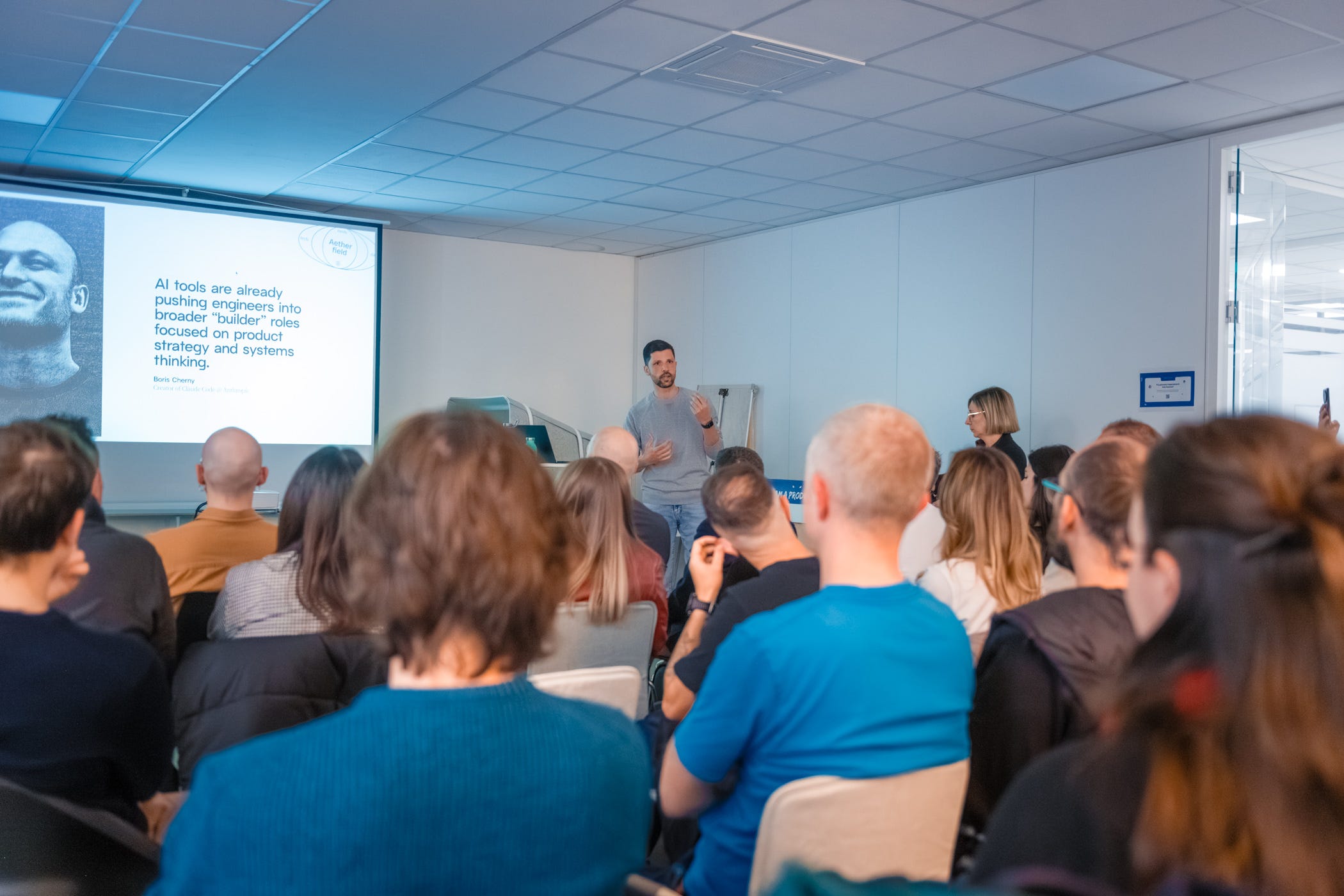
In March I gave three talks in Milan, Cesena, and Trieste. Same title each time: “Quando costruire non è più il problema” (When building is no longer the problem).
The core thesis: AI has compressed the build phase so much that the real challenges are now clarity, distribution, and taste. The bottleneck has shifted.
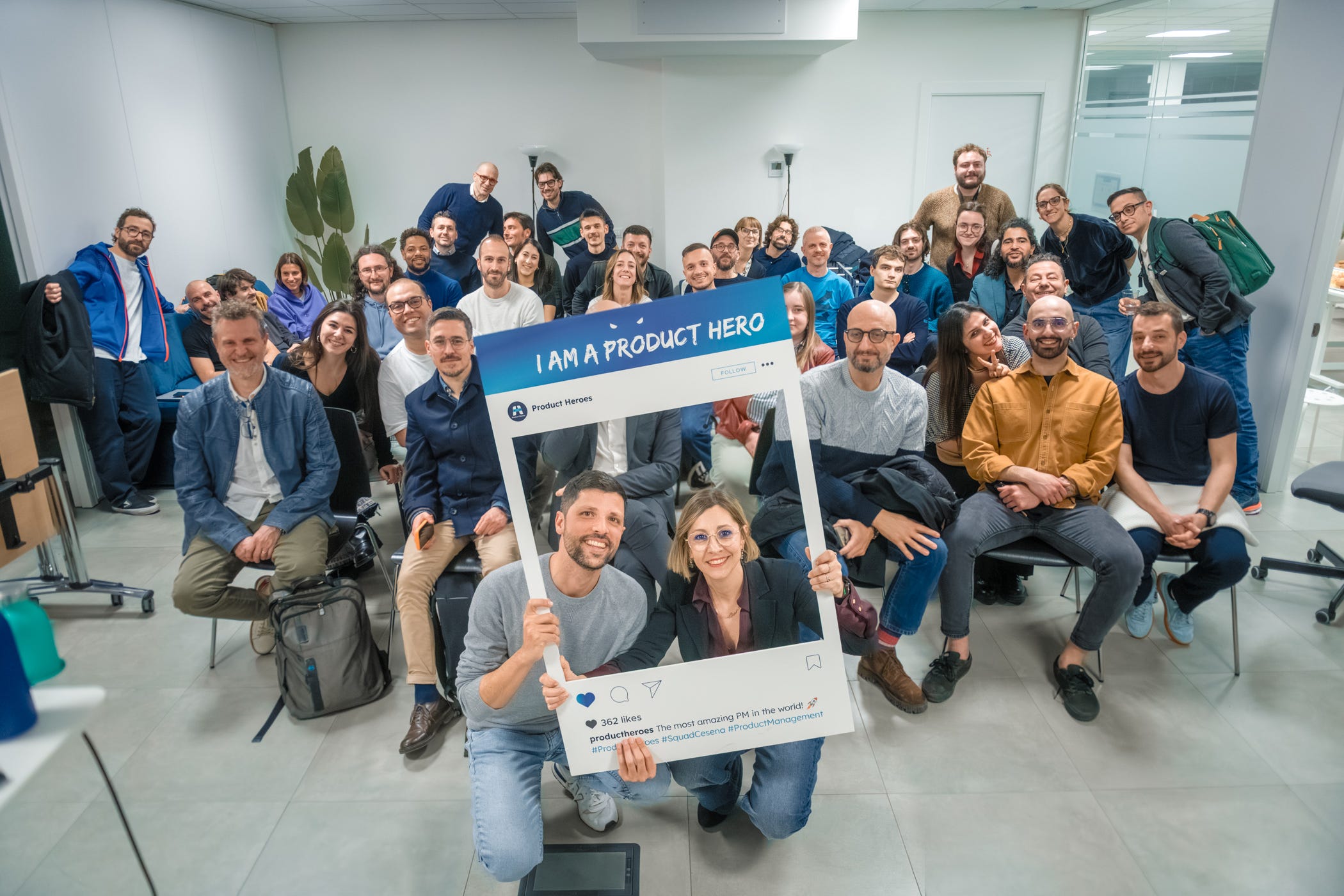
During two of those talks, developers in the audience raised the same concern: “What about security? What about GDPR?”
I get the worry. It’s valid. But it also told me something. The biggest risk in 2026 isn’t a fine from the Privacy Authority. It’s not having the AI skills to build at all. The compliance question matters, but it shouldn’t be what stops you from starting.
That said, people were genuinely worried, and that means this needs a proper answer. So I wrote one. A practical breakdown of what compliance actually looks like for solo builders in 2026. Coming soon on One Million Goal.
That said. Thank you again Gerson, Emanuele, and Licia for having me!
Beyond Products
Two other things worth mentioning.
I launched a personal website at marcosantonocito.com. It’s minimal, a placeholder really, but it exists. Sometimes shipping something imperfect beats shipping nothing.
I’m also running a civic innovation lab called “Design the Future” through Civitas in Pordenone. Double Diamond framework, civic context, helping people who’ve never thought in product terms make sense of complex community problems.
Different world from apps and funnels, but the thinking is the same.
Metrics Snapshot
Anapana: Revenue private. Funnel metrics shared above. Going well.
Coco: ~100 organic users. No revenue yet (still in feedback/iteration phase).
One Million Goal (Revenue to Date): €220,069.80
Reflections
When you step away from building for a few weeks, you’d expect to come back anxious. Desperate to catch up. I didn’t. I came back clearer about what matters. Two products are working. The rest can wait.
But I’ve also been reflecting a lot about the future of work. Not in the abstract “thought leadership” way. In the practical, what does this actually mean for me and the people around me way.
I’m going to share some open questions here. I don’t have all the answers yet, but I’ll be writing my thoughts about each of them in the next days. For now, I want to put them on the table.
Some context first.
A solo operator can now launch a billion-dollar business powered by AI. The economy’s dividing line is no longer skill or education. It’s will.
Boris Cherny put it well: “AI tools are already pushing engineers into broader builder roles focused on product strategy and systems thinking.”
I completely agree with him. The boundaries between PMs, designers, and developers are thinning fast. What’s becoming more important are hybrid figures: small, fast, multidisciplinary, with high agency.
The questions I keep coming back to.
If one good engineer can now 10x their output, companies will need fewer of them. Which engineers will stay? And what happens to the ones who don’t?
Will Product Managers become less useful or more useful? And what about designers, once AI can generate good UIs? I’ve tested a lot of tools and honestly, we’re not there yet. But we’re getting close enough to ask the question seriously.
How does the future of work actually change? Companies need to free people with extreme agency, but how do you do that in practice? Will there still be a need for middle management, or does that layer just... disappear?
No answers today. Just questions I keep turning over. I’ll be writing about each of these soon. If any of them hit you, reply or drop a comment. I’m genuinely curious what you think.
—
Thanks for being here.
See you in the next one.
Hi Marco, congratulations :) Can you share the link of Coco please? You mentioned that revenues today are €220,069.80 and in Coco you've only 100 users (you're in a validation phase), so I suppose that 90% arrives from Ananapa, correct? Anyway it's amazing! Do you think that only using Claude code for example is it possible to build a new app without particular programming skills? Thank you for sharing!