

Hey, I’m Marco 👋
I build in public toward €1M, and you get to watch and steal everything I learn. You can read more about me and my project here.
Revenue to date: €220,069 / €1,000,000
Picture this: it’s 6am in Melbourne, Australia. A man straps on his work boots, loads a lawn mower into his car, and drives to the first job of the day. He’ll mow lawns until 6pm. Then he’ll go home, sit at his desk, and write code until midnight.
He has $200,000 in debt. His web agency has collapsed. His cars were repossessed. And every morning, he chooses the lawn mower over the blanket.
That man is Adam Lyttle. And the reason I wanted to write about him isn’t because of where he ended up… it’s because of what he figured out while he was still at the bottom.
The Rise and the Collapse
For a few years, things were going well. Adam had built a web development agency in Melbourne that, at its peak, was generating around $300,000 in profit per year. No co-founders. Just him, some clients, and a growing reputation for getting things done.
The problem is that the web agency business in the mid-2010s was sitting on a fault line. When Wix and Squarespace arrived in earnest, the market for custom-built websites didn’t just shrink… it evaporated. Almost overnight, Adam could no longer charge $10,000 for something a client could build themselves for $10 a month. He tried lowering prices, working more hours, grinding harder. That just meant more burnout for less money.
Eventually he couldn’t even sit at his desk. The debts mounted. Everything started falling apart slowly, then all at once.
What he was left with, after the cars were taken and the accounts frozen, was $200,000 in debt and nothing else.

Most people would have taken that as a signal to go find a steady job. Adam, somehow, read it as a signal to start building apps.
The Lawn Mowing Route App
There’s a beautiful irony in how Adam found his next idea. He’d started mowing lawns, literally, to rebuild his confidence and make ends meet. And while driving between jobs one day, trying to figure out the most efficient route, he asked some of the other lawn-mowers how they organized their work.
A piece of paper, one guy told him. Names and addresses on one side for week one, flip it over for week two.
No app? Adam asked.
No app exists, the guy said. Someone should make one.
So Adam spent six months building a lawn mowing route management app. He launched it. It flopped completely.
I’ve thought about this story a lot. Because on the surface it looks like a failure, and it was. But it also forced Adam to ask a question he’d been avoiding: why would an app with a clear use case, a clear audience, and a clear need just... not work?
He didn’t have a good answer. So he decided to learn by doing, at volume.
One app per month. Every month.
Volume as a Learning Strategy
The one-app-a-month challenge sounds exhausting when you describe it. In practice, Adam found it clarifying. Building fast forces you to strip away everything that doesn’t matter. You can’t spend six weeks perfecting onboarding when you’ve got a deadline in three weeks. You ship something real, you see if anyone cares, and you move on.
A tweet he posted in the middle of his journey captures this better than I can:

Most of the apps went nowhere. But one didn’t. One started generating around $11,000 per month. And one day, somebody reached out offering to buy it for two times annual revenue: $224,000.
Adam took the deal. That money paid off enough of the debt to keep the collectors at bay, and kept him out of bankruptcy court, which would have ended his developer career entirely.
But more than the money, the sale changed how he thought about what he was doing. An app generating $11,000 a month sells for $224,000. That math reframes everything. Instead of thinking “I need to build something massive,” he started thinking: I need to build a portfolio of small, stable things… and let the aggregate do the work.
He sold eight apps over two years, using each exit as runway to fund the next experiment. Building, selling, building again.
The Pepsi Max Moment
There’s a scene Adam has described in interviews that I keep coming back to. He was out for dinner with his family, a rare small luxury during a hard period. He wanted a Pepsi Max. He looked at the price. He couldn’t afford it.
He sat there and thought: what am I doing?
The build-and-sell model was working, technically, but it wasn’t building anything durable. Every time he sold an app, he was back to zero. The runway would run out eventually, and he’d be right back where he started.
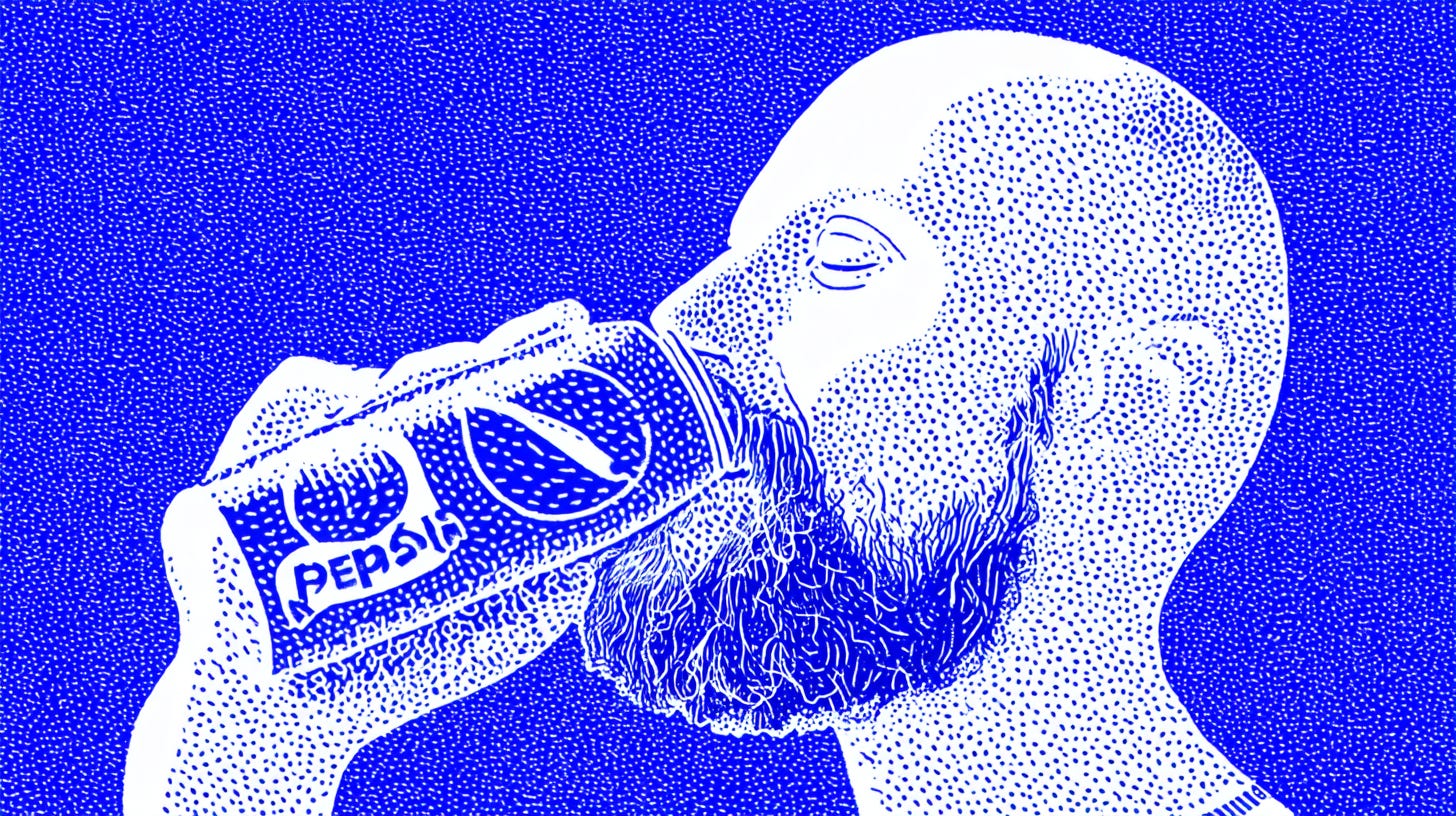
That night, he decided to change the model. Instead of building to sell, he’d build to keep, and he’d charge subscriptions instead of one-time fees. That way, the portfolio would compound. Each app would add a small monthly amount that never went away.
The timing was fortunate. ChatGPT had just become broadly available, and Adam challenged himself to build ten apps in a single month using AI assistance. He managed nine. He pushed his portfolio to over fifty apps and watched the aggregate subscriptions climb to a level where he could finally stop selling.
He paid off all $200,000 of debt in the summer of 2023.
The Paywall That Changed Everything
Most people, when they hear Adam’s story, focus on the volume. Fifty apps. Nine apps in a month. One per month for years. It sounds like a relentless production line.
But the moment that actually changed the revenue trajectory had nothing to do with volume. It was a paywall.
Adam had distribution. His apps were getting downloads. But the revenue wasn’t reflecting the attention. So he redesigned the onboarding and paywall experience across his portfolio, more intentional conversion flows, better-structured trial offers, and his monthly revenue went from around $10,000 to $50,000 essentially overnight.
He tweeted about it the day he hit $800,000 in cumulative sales:


He talks about this distinction often, and it’s one of the most useful things he’s put into words: distribution and monetization are separate problems. Most indie developers try to solve them simultaneously, which means they solve neither well. Adam spent years solving distribution through volume and ASO. When he finally turned his attention to monetization, the existing distribution made every improvement compound faster.
He shared this publicly… including the specific paywall design that drove much of the jump, the exact numbers, the actual screens. Not a cleaned-up version of events.
This is the kind of thing that makes his YouTube channel worth watching and his Twitter feed worth following. He’ll show you what actually happened.
A Rising Tide Lifts All Boats
That line is Adam’s motto, and it explains a lot about why he’s built an audience of 47,000 followers on X and runs a YouTube channel that I genuinely think has some of the best practical indie dev content available.
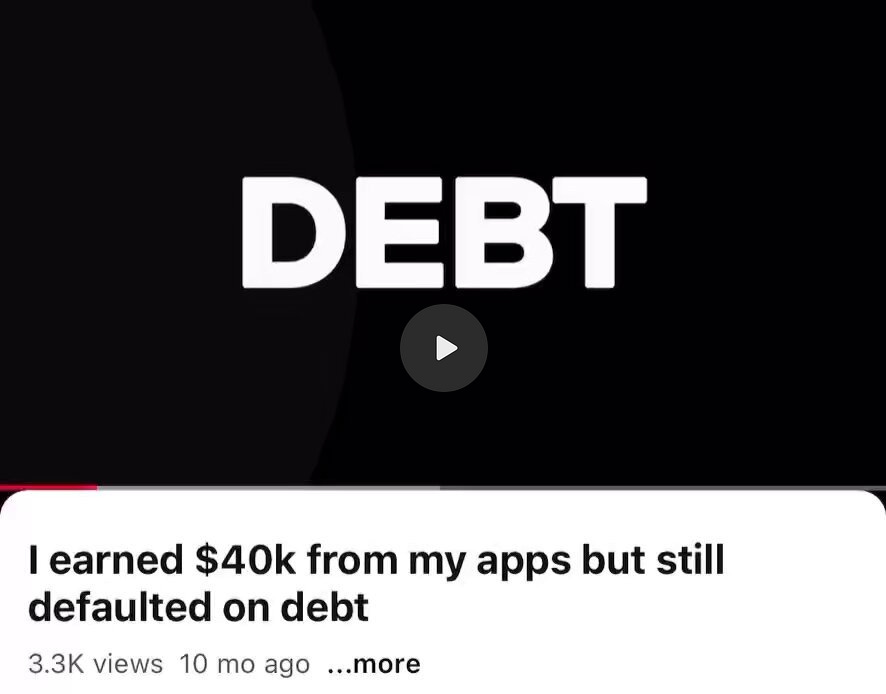

He shares everything. Revenue milestones, failed experiments, apps that earned nothing, the paywall that started getting rejected by Apple. He doesn’t curate a highlight reel or more accurately, he curates the failures just as much as the wins, which creates something unusual: a builder people actually trust.
When he crossed the $1M milestone, the tweet he posted wasn’t a celebratory launch post. It was almost an afterthought:
That’s the whole brand right there. Self-aware, a little dry, and honest about where the doubts came from.
He also open-sourced his core reusable components (onboarding flows, paywall screens, OpenAI wrappers) because if everyone can build faster, the ecosystem gets richer and so does the opportunity for all of them.
This isn’t a calculated content strategy. It reads more like someone who genuinely believes that sharing what he knows costs him nothing and helps others. That the community formed around that kind of honesty is worth having.
Why This Story Matters to Me
Reading about Adam while I’m building Coco and working on Anapana, a few things land differently than they would have a year ago.
The first is the sequencing. Adam didn’t solve distribution and monetization at the same time. He committed to distribution first (built the portfolio, learned ASO, accepted modest revenue for a long time) and only then optimized for conversion. Most builders try to do both simultaneously and wonder why neither works. There’s something uncomfortable about that sequencing because it means accepting a long period where you’re getting downloads but not the money you think you deserve. But the discipline of it is real.
The second is what “volume“ actually means in practice. People hear “fifty apps” and imagine a factory. What it actually is, I think, is a method for reducing the emotional weight of any single bet. When one app doesn’t work, there are forty-nine others. The portfolio isn’t just a revenue strategy, it’s a psychological one. It keeps you moving when individual things fail, which they often do.
Adam posted something during his quieter years that I think every builder going through a slow period should save somewhere:
He was right. Though you can’t know that until after it happens.
The third is the lifestyle decision underneath all of it. Adam has five kids. He’s not building toward some future state where he’ll finally have freedom. He’s building to have freedom now, within constraints that are real and present. The lawn mowing, the coding at midnight, the fifty apps… none of it was hustle for hustle’s sake. It was a father trying to work out how to provide for his family without sacrificing the things that actually matter.
He crossed $1M in cumulative App Store sales not long ago. He’s working out of Melbourne, in whatever hours make sense for a family with five children.
That’s not a footnote to the story. That’s the point of it.
If you’re building something too, what’s your Pepsi Max moment? The one where you looked at what you were doing and realized the model was wrong… not the product, not the execution, but the fundamental logic underneath it?
Sometimes you need to get there before anything else changes.
Thanks for reading One Million Goal. If this was useful, forward it to one person who’s thinking about building apps solo.