

Hey, I’m Marco 👋
I build in public toward €1M, and you get to watch and steal everything I learn. You can read more about me and my project here.
Revenue to date: €220,000 / €1,000,000
Pieter Levels is one of the most famous indie hackers (→ what is an indie hacker?) who built a $3.1M per year startup empire without funding, employees, or an office.
From launching 12 startups in 12 months to pioneering AI tools and redefining the digital nomad lifestyle, his journey proves that one person with a laptop can change the game.
While most entrepreneurs chase venture capital and build teams, Levels took the opposite approach. He bootstrapped everything, automated relentlessly, and shared his exact revenue numbers on Twitter. The result? A portfolio of profitable businesses that generate millions in annual revenue while he travels the world, codes, and maintains 90%+ profit margins.
His story isn't just inspiring… it's a complete blueprint for how AI is democratizing entrepreneurship and making solo million-dollar companies not just possible, but probable. To understand why his approach works when conventional wisdom says it shouldn't, we need to dig deep into the man, the methods, and the counterintuitive strategies behind one of the most successful indie hackers of our time.

The Journey
The Breaking Point That Started Everything
In early 2014, Pieter Levels was 29 years old and living with his parents in the Netherlands. After graduating with an MBA in International Business Administration, he should have been climbing the corporate ladder. Instead, he was battling depression and anxiety attacks while his YouTube music channel, Panda Mix Show, was slowly dying.
The channel had actually been somewhat successful in 2012, earning around $40K that year from YouTube ads. But by 2013-2014, it was making only $500 per month and trending downward. Levels felt like a failure - educated, talented, but unable to make anything work.
His mental health deteriorated. He describes experiencing panic attacks and feeling completely lost about his future. The turning point came when his father, watching his son struggle, gave him simple but powerful advice: "Get active and do something".
That "something" would become the most famous productivity challenge in indie hacker history.

The 12 Startups in 12 Months Challenge
In March 2014, Levels made a public commitment that would change his life and inspire thousands of entrepreneurs: launch 12 complete startups in 12 months. Not prototypes, not concepts - fully functional websites with live payment systems from day one.
The rules were deceptively simple:
One startup per month
Each must have a working website
Each must have Stripe payment integration
Each must be publicly launched
Share progress transparently online
The challenge served multiple psychological and practical purposes:
Forced Execution Over Perfectionism: With only 30 days per project, there was no time for endless tweaking. This constraint forced him to focus on core functionality and ship quickly.
Rapid Market Validation: By launching fast and cheap, he could test market demand without significant investment. If something didn't work, move on to the next idea.
Skills Development Through Repetition: Building 12 different products meant encountering and solving similar problems repeatedly, rapidly improving his technical and business skills.
Public Accountability: By announcing the challenge publicly, he created social pressure that made quitting much harder. The internet was watching.
Volume Over Quality: Instead of betting everything on one "perfect" idea, he increased his odds by trying many different approaches.
The Projects: A Mix of Failures and Million-Dollar Hits
The 12 projects included:
Play My Inbox (March 2014) - Music player for emailed tracks
Go Fucking Do It (April 2014) - Goal tracking with financial penalties
Tubelytics (May 2014) - YouTube analytics dashboard
Nomad List (July 2014) - City rankings for digital nomads
Nomad Jobs (August 2014) - Remote job board (later became Remote OK)
GIFbook (October 2014) - Print GIFs as flipbooks
#nomads Community (October 2014) - Slack community for nomads
Remote OK (February 2015) - Remote job board
Startup Retreats (July 2015) - Directory of startup retreats
Places to Work (July 2016) - Café/workspace finder
Hoodmaps (August 2017) - Crowdsourced neighborhood mapping
Various smaller experiments
Most failed to gain significant traction or revenue. But two projects - Nomad List and what would become Remote OK - struck gold.
Go Fucking Do It went viral, getting featured in Wired, The Next Web, and Lifehacker. While it didn't become a sustainable business, it proved Levels could create products that captured attention.
Nomad List accidentally became a phenomenon when a server misconfiguration made it publicly accessible before the planned launch, causing it to spread organically and hit #1 on both Product Hunt and Hacker News.
His Products: The Portfolio That Generates Millions
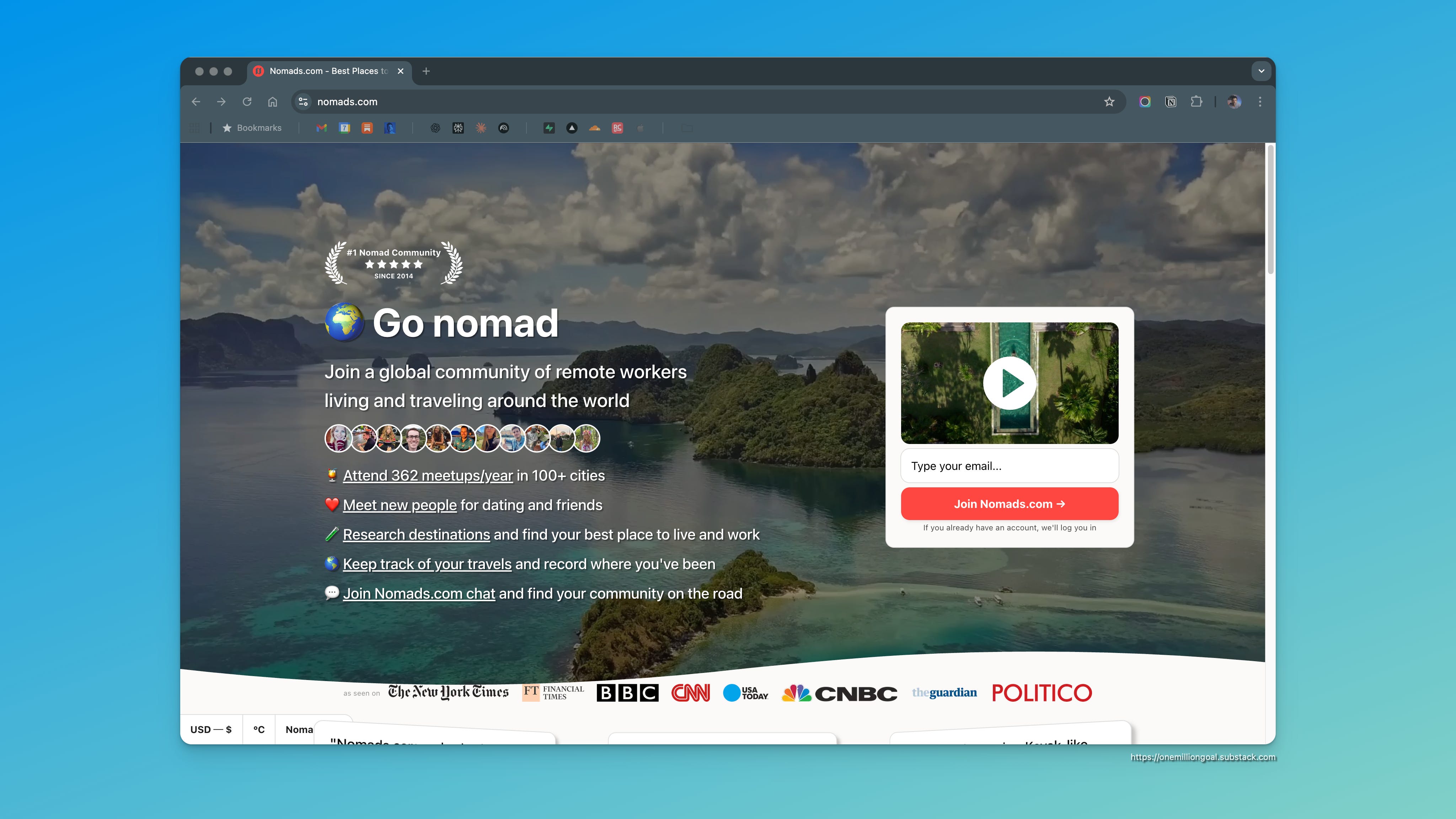
Nomad List (2014-present): $700K+ Annual Revenue
Nomad List (now nomads.com) began as a simple Google Spreadsheet that Levels tweeted out, asking people to crowdsource data about cities suitable for digital nomads. Within 24 hours, around 100 people had filled in city data, validating massive demand.
"I was slightly stunned by the response," Levels wrote. "With Twitter going crazy about just a spreadsheet list, I had just answered the hypothesis if there'd be interest for this. There was."
He quickly built a minimal web interface, drawing design inspiration from Product Hunt to create a clean, list-style UI. The site ranks 2,500+ cities based on:
Internet speed and reliability
Cost of living (housing, food, transport)
Safety and crime rates
Weather and air quality
Visa requirements and ease of entry
Quality of life factors
Community and networking opportunities
The platform evolved far beyond simple rankings. Today it includes:
Community Features: A paid membership gives access to a private community of 29,000+ members where nomads can connect, share experiences, and coordinate meetups in cities worldwide.
Data Depth: Each city page includes detailed breakdowns of costs, internet speeds, safety ratings, weather patterns, and even air quality measurements. Much of this data is user-contributed and continuously updated.
Matchmaking Tools: Features to help nomads find compatible travel companions or housing arrangements.
Event Coordination: Integration with local meetups and nomad gatherings.
The genius of Nomad List isn't just the data - it's the community network effect. Users come for the information but stay for the connections. The community becomes self-sustaining as members contribute new data, organize events, and recruit other nomads.
Revenue Model Evolution:
Initially tried one-time "access fees" and city-specific products
Introduced one-time membership fees (~$50-100) in 2015
Switched to subscription model ($9.99/month) in 2016
Currently offers monthly and lifetime membership options
By 2019, Nomad List was serving over 1 million users monthly and generating around $300K annually on its own.
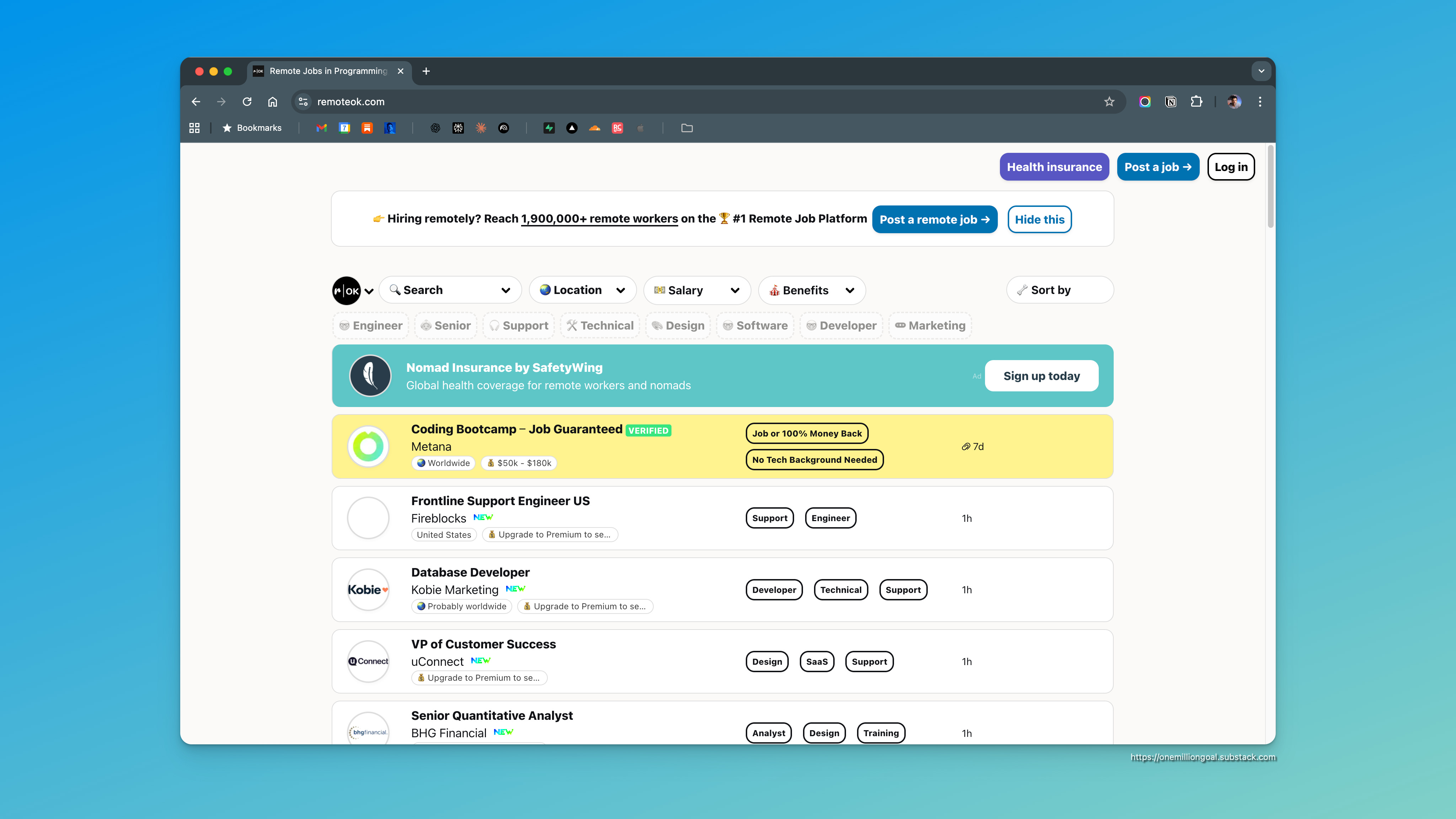
Remote OK (2015-present): $1.5M Annual Revenue
Remote OK emerged from the same ecosystem as Nomad List. While Nomad List solved "where to live," Levels recognized the need to help people find jobs that allowed remote work.
The site began in late 2014 as "Nomad Jobs," a simple board for remote-friendly startup positions. In February 2015, it evolved into Remote OK as a standalone platform.
The Aggregation Strategy: Instead of starting as a traditional job board, Remote OK began as a "daily remote job aggregator." Levels wrote scrapers to pull remote job listings from other job boards' RSS feeds and APIs, consolidating them in one place.
This approach solved several problems:
Gave Remote OK comprehensive listings from day one
Reduced dependence on companies posting directly
Created immediate value for job seekers
Established Remote OK as the go-to remote jobs destination
Technical Implementation: Levels built filters using regex rules and heuristics to determine if jobs were truly remote and to categorize them by technology stack. The site's design featured a spinning globe visualization emphasizing the "work from anywhere" theme.
Growth and Scale: The timing was perfect. In 2015, major job boards weren't embracing remote work yet. Remote OK filled this gap and gained traction quickly, hitting #1 on Product Hunt during launch.
By 2016, Remote OK was attracting 700K monthly visitors. The COVID-19 pandemic accelerated growth as companies worldwide scrambled to offer remote positions.
Current Status: Remote OK processes over 100,000 job listings and attracts 3+ million monthly visitors. Major companies including Microsoft, Amazon, and Google regularly post positions on the platform.
Revenue Model: Companies pay to post job listings (typically a few hundred dollars per post). Levels optimized this with upsell options:
Featured listings
Company logo inclusion
Extended posting duration
Highlighting options
These upsells increased average order value from ~$310 to ~$484 per customer, significantly boosting revenue.
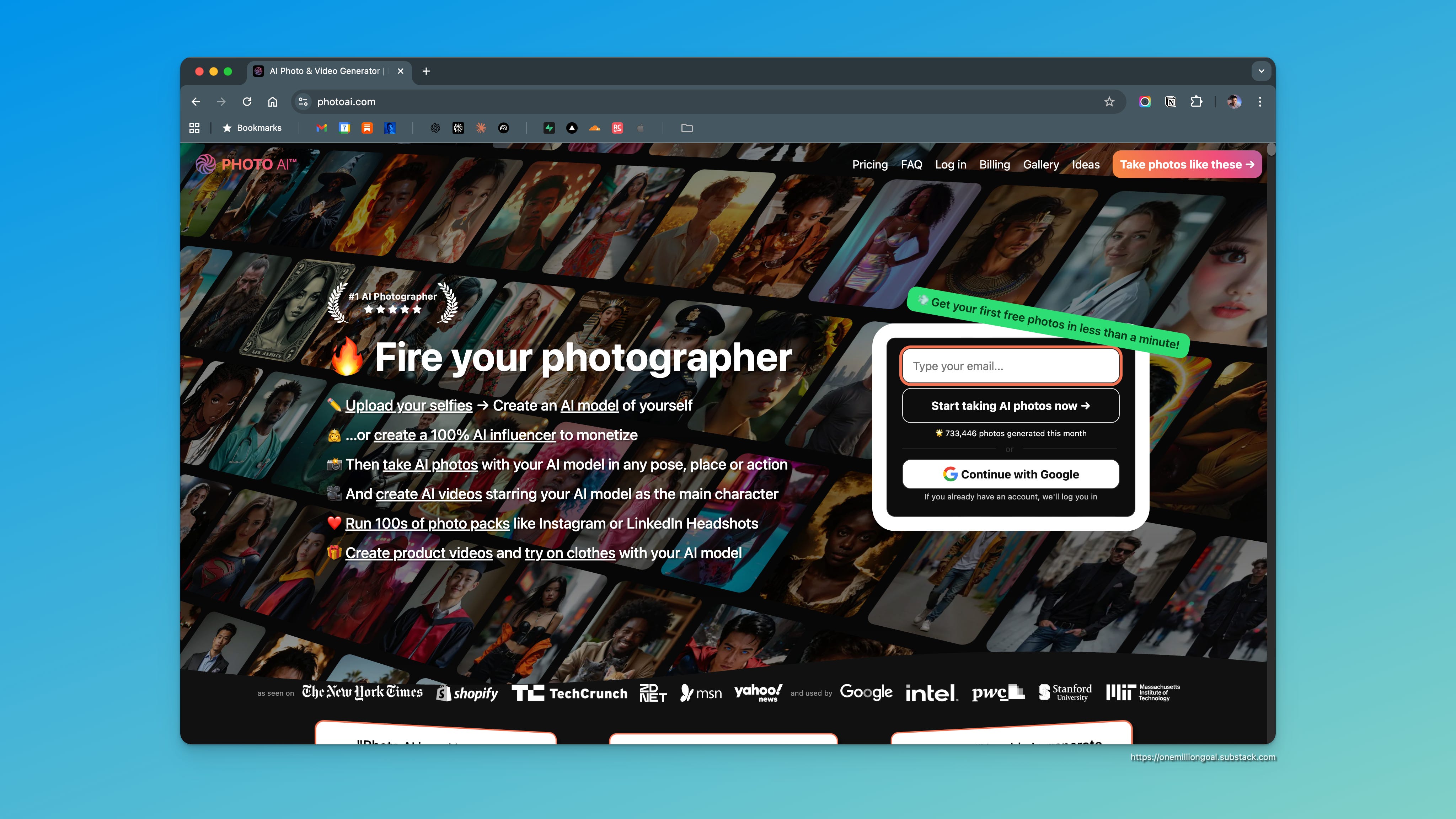
AI-Powered Ventures (2022-2023): $1M+ Combined
Never one to rest on his laurels, Levels jumped into the AI revolution early, launching several AI-powered products that quickly gained traction:
Photo AI: Launched in 2023, this service uses artificial intelligence to create photorealistic photos and videos of people, including the ability to create synthetic AI influencers. The platform achieved remarkable early success, earning $100K in its first 10 days.
Interior AI: Founded in 2022, this tool transforms interior spaces using AI, allowing users to upload photos and redesign rooms in different styles. The platform boasts over 99% profit margins with GPU costs of only $200/month for 21,000 designs. It serves real estate agents, interior designers, and homeowners seeking virtual staging solutions.
fly.pieter.com: A browser-based flight simulator built in just 30 minutes using AI coding tools. Created with vanilla HTML and JavaScript without any game engine, it demonstrates the power of modern AI-assisted development. Despite being built as a fun experiment, it generated $1M ARR in just 17 days, showcasing how AI can dramatically reduce development time.
By mid-2023, these AI-driven products accounted for roughly half of Levels' total revenue - an astonishing pivot that essentially doubled his income in under two years.
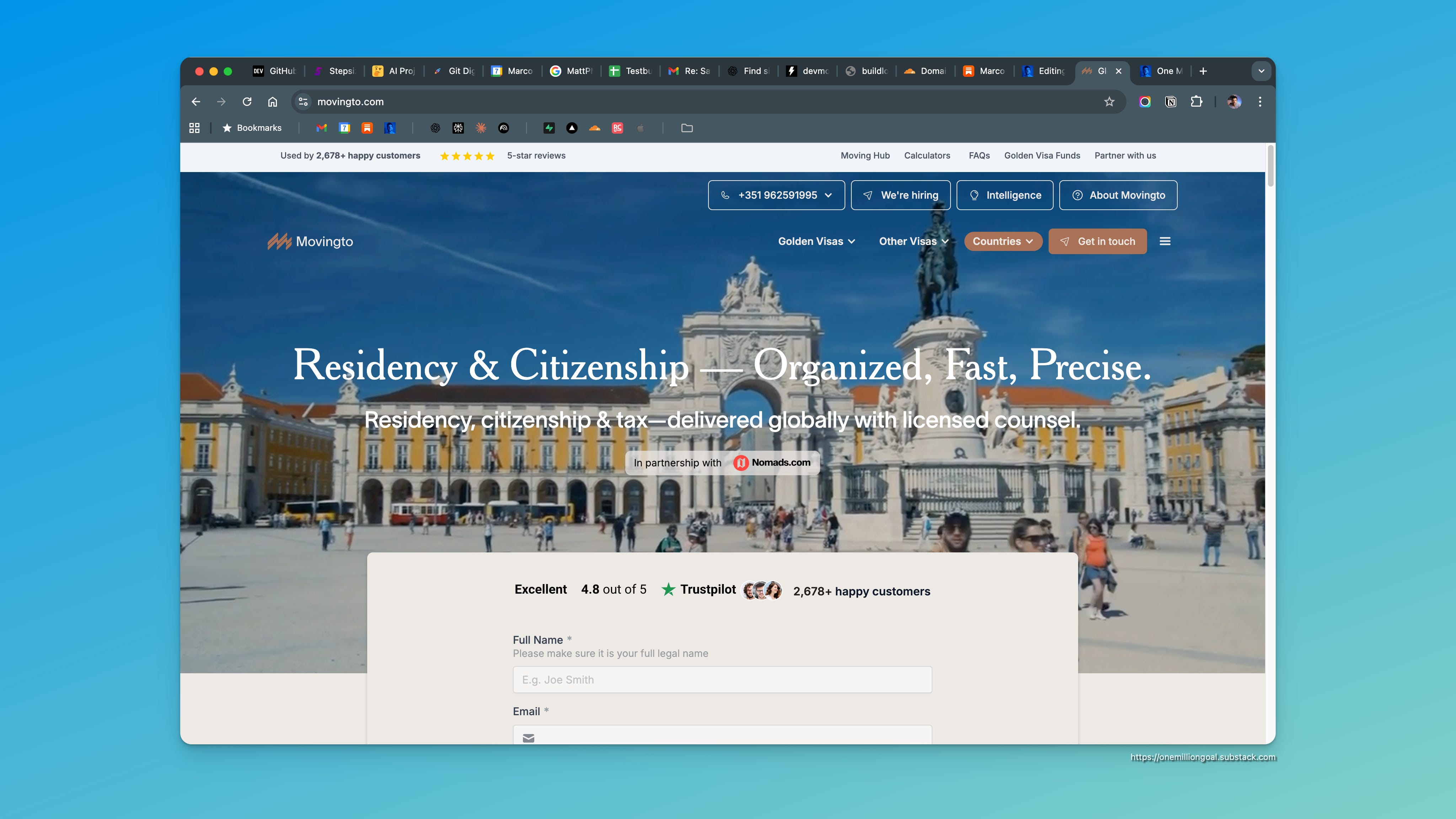
Rebase (2021-present): Immigration as a Service
Rebase (now Moving To) represents Levels' most ambitious project - an "immigration-as-a-service" platform helping remote workers and digital nomads relocate to countries that welcome them.
The Origin Story: The idea came from Levels' personal experience. After years of nomadic travel, he realized the need to establish legal residency somewhere for banking and tax purposes. During the pandemic, he chose Portugal and navigated the complex bureaucracy of visas and residency applications.
The experience revealed a massive market opportunity to simplify this process for others.
The Service: Rebase aims to streamline complex immigration processes through a web interface. Users sign up, pay, enter their details, and Rebase handles the paperwork and coordination with local immigration experts.
Levels has been working on automating government PDF form filling through code to speed up visa applications, with a long-term vision of making relocation as easy as incorporating a company via Stripe Atlas.
Market Validation: When Levels teased the concept on Twitter in October 2021 with a simple "working on an immigration startup" post, it went viral with ~1,000 retweets. This translated into 500+ people signing up for the waitlist in the first month.
"I think we had 500 signups in one month of people wanting to move to Portugal," Levels recalled. "I was doing 10% of the entire Portuguese immigration market within a month. It was insane."
The interest was so high that he had to temporarily pause new signups because partnered lawyers couldn't handle the volume.
Current Status: Rebase is operational, focusing initially on Portugal's D7/D8 visas and "non-habitual resident" tax program. It's a more complex, service-heavy business than his other ventures, but it taps directly into the massive trend of remote workers relocating internationally.
Revenue Timeline: The Path to $3M
2013-2014 - $500/month - YouTube channel declining, living with parents
2014 - Minimal - Started 12-startups-in-12-months challenge, Nomad List goes viral
2015 - $203K - Introduced paid Nomad List membership
2016 - ~$300K - Switched to subscription model, 700K monthly users
2017 - ~$360K - Steady growth, launched Nomad List 3.0
2018 - ~$600K - Major revenue optimizations, launched Makebook
2019 - $1M+ ARR - Crossed seven-figure milestone
2020 - $1.4M - COVID boosted remote work demand
2021 - $1M-$2M - Stable income, started planning Rebase
2022 - ~$1M+ - Launched AI products, AvatarAI (now PhotoAI) hit $100K in 10 days
2023 - $2.2M - AI apps account for 50% of revenue
2024-2025 - $3.1M+ - Continued portfolio growth, 85-99% profit margins
Behind the Scenes: The Systems That Enable Solo Success
Philosophy: The Three Pillars of Independence
The Anti-VC Approach

While most startups chase venture capital, Levels deliberately avoids it. This isn't just preference - it's strategic philosophy based on several key insights:
Complete Creative Control: Without investors, Levels can build exactly what he wants without committee decisions or board approval. When he wants to pivot, experiment, or shut down a project, he can do so immediately.
Higher Profit Margins: Venture-backed companies typically have 10-20% profit margins due to high overhead and investor expectations for growth at all costs. Levels maintains 85-99% profit margins because he has no investors to pay and minimal expenses.
Faster Decision Making: No board meetings, investor updates, or consensus building. When Levels sees an opportunity or problem, he can act within hours or days rather than weeks or months.
Direct Customer Relationships: Without investor pressure to prioritize growth metrics over user satisfaction, Levels can focus entirely on building products customers actually want to pay for.
Personal Freedom: The business serves his lifestyle rather than investor demands. He can travel, work when he wants, and structure his life around personal priorities.
Risk Mitigation: Without external funding pressure, he doesn't need to "swing for the fences" with every project. He can take smaller, safer bets and build sustainable businesses rather than chasing unicorn outcomes.
This approach has allowed him to maintain ownership of businesses that generate millions in personal income rather than building large companies with diluted equity stakes.
"Scratch Your Own Itch" Product Development
Every successful Levels product began as a solution to his personal problems:
Nomad List: Born from his own need to find suitable cities for remote work while traveling. He personally experienced the frustration of researching internet speeds, costs, and safety for different destinations.
Remote OK: Emerged from difficulty finding quality remote job opportunities when major job boards weren't serving this market well.
Rebase: Came from his personal struggle with Portuguese residency paperwork and realizing how painful the process was for other nomads.
This approach ensures several critical advantages:
Authentic Market Need: If Levels faces a problem, likely thousands of others do too. This built-in market validation reduces the risk of building something nobody wants.
Deep User Understanding: As his own target user, he intuitively understands pain points, desired features, and acceptable pricing without extensive user research.
Sustained Motivation: Working on problems you personally face creates intrinsic motivation that sustains effort through difficult periods.
Natural Quality Control: Since he uses his own products daily, quality issues and feature gaps become immediately obvious.
Radical Transparency as a Moat

Levels pioneered "building in public" before it became a movement. He shares:
Real-time revenue screenshots from Stripe dashboard
Development challenges and technical failures
Personal struggles with mental health and motivation
Technical decisions and code snippets
Business metrics and growth data
Exact costs and profit margins
This transparency serves multiple strategic purposes:
Trust Building: Seeing actual revenue and honest struggles makes him more credible than polished marketing messages.
Accountability: Public commitments create pressure to follow through on promises and goals.
Organic Marketing: Authentic storytelling generates more engagement than traditional advertising.
Community Building: Transparency makes followers feel like insiders, creating stronger connections to both Levels and his products.
Competitive Moat: Competitors can copy features but they can't copy the personal brand and trust that transparency builds over years.
Network Effects: Other entrepreneurs follow him for inspiration and insights, becoming potential customers or collaborators.
Tech Stack: The "Vanilla" Approach That Scales
Levels' technology choices seem almost deliberately contrarian to modern development practices. While most startups use complex frameworks and cloud architectures, he builds everything with intentionally simple tools:

Backend: PHP and Simple Databases
Language Choice: PHP remains his primary backend language despite being considered "outdated" by many developers. His reasoning:
Extremely familiar: He's been writing PHP for over a decade
Rapid development: Can build features quickly without fighting frameworks
Proven reliability: PHP powers huge portions of the web without issues
Easy deployment: Simple to deploy and debug on basic web servers
Cost effective: Runs efficiently on inexpensive hosting
Database Strategy: Levels initially avoided traditional databases entirely, storing data in flat JSON files for rapid prototyping. While this seems crazy, it offered advantages:
Zero setup time: No database schemas or migrations to manage
Easy backup: Just copy files
Simple debugging: Can inspect data with any text editor
Version control: Can track data changes with Git
As projects grew, he migrated to PostgreSQL and MySQL for user accounts and complex queries, but much data is still heavily cached or served as static files for performance.
Frontend: Vanilla JavaScript and CSS
No Frameworks: Levels writes front-end code in plain HTML/CSS/JavaScript, enhanced with jQuery for DOM manipulation. No React, Angular, or Vue.
Benefits of this approach:
Pages load extremely fast
Zero build process or compilation steps
Easy maintenance for one person
No dependency management headaches
Works everywhere without compatibility issues
Performance Focus: By avoiding heavy frameworks, his sites load quickly even on slow connections - crucial for nomads in developing countries with poor internet.
Infrastructure: Single Server Simplicity
Hosting: All sites run on a few Linode VPS (Virtual Private Servers) rather than complex cloud architectures.
Started with single $40/month server hosting everything
Uses Nginx as web server for both static files and PHP requests
Cloudflare provides CDN and caching
Simple Ubuntu Linux setup he manages himself
Scaling Strategy: Rather than microservices and auto-scaling, he focuses on:
Heavy caching (Nginx + Cloudflare)
Mostly static or read-heavy pages
Minimal database writes
Optimized code that runs efficiently
This approach has handled being #1 on Hacker News and Product Hunt without crashing, proving that simple can scale when done correctly.
Development Tools and Workflow
Code Editor: Sublime Text 3 for speed and simplicity
Task Management: Trello with Kanban-style organization
Version Control: Git for code management
Testing: Develops locally on Mac, deploys to Linux servers
Monitoring: Custom scripts and simple log files
APIs and External Services
Levels leverages third-party APIs strategically:
Data Sources: Numbeo for cost of living, weather APIs, currency conversion
AI Services: Uses Replicate and custom Stable Diffusion instances rather than building models from scratch
Payments: Stripe for all payment processing
Forms: Typeform for data collection and surveys
Email: Standard SMTP services for transactional emails
This approach allows him to focus on core business logic while outsourcing commodity functionality.
Automation: The Solo Founder's Superpower
Running multiple million-dollar businesses alone requires extensive automation:
Technical Automation:
Content moderation using GPT models for community management
Automated data collection and city ranking updates
Payment processing and user onboarding flows
Customer support through AI-powered response systems
Automated social media posting and engagement
Operational Automation:
Server maintenance through managed hosting services
Legal compliance via automated systems where possible
Financial reporting and tax preparation
User analytics and business intelligence dashboards
Backup and disaster recovery processes
Custom Scripts: Levels writes PHP scripts for repetitive tasks:
Scraping job listings from RSS feeds (Remote OK)
Auto-filling government PDF forms (Rebase)
Currency conversion updates (Nomad List)
Email newsletter generation and sending
Data validation and cleanup processes
These automation systems run via cron jobs on his servers, reducing manual work and allowing him to focus on high-value activities like product development and strategy.
Marketing: Building Trust Through Authenticity
Levels' marketing approach centers on authenticity and community over traditional advertising:
Building in Public as a Marketing Channel
Revenue Transparency: Regularly shares exact revenue figures from Stripe dashboard, showing both successes and failures. These posts often go viral and drive significant traffic.
Development Process: Live-tweets coding sessions, bug fixes, and feature development. Followers feel like they're part of the journey.
Personal Struggles: Openly discusses mental health challenges, business setbacks, and personal failures. This vulnerability creates deep connections with his audience.
Technical Insights: Shares code snippets, architectural decisions, and technical challenges. Developers follow him to learn and often become customers.
Community-First Product Strategy
Nomad List Community: Rather than just providing data, he built a paid community where users connect, share experiences, and help each other. The community becomes the product's moat.
#nomads Slack: Started as free community that grew to thousands of members, later monetized through Nomad List membership.
Meetup Organization: Coordinates in-person gatherings in major nomad destinations, strengthening online relationships through offline interactions.
User-Generated Content: Encourages users to contribute city data, reviews, and recommendations, making them stakeholders in the platform's success.
Product Hunt and Maker Community Mastery
Consistent Launching: Nearly every project from 12-startups-in-12-months challenge was posted on Product Hunt, often reaching top positions.
Community Engagement: Actively participated in Product Hunt community, helping other makers and building relationships.
Maker of the Year: Named #3 "Maker of the Year" by Product Hunt in 2015, providing significant credibility and exposure.
Launch Strategy: Perfected timing, messaging, and community mobilization for maximum Product Hunt impact.
Viral Press Coverage Strategy
Compelling Narrative: Positioned himself as "the digital nomad guy building cool things" - a story journalists found intriguing.
Media Accessibility: Made himself available for interviews and provided good quotes and visuals.
Trend Timing: Launched during the early wave of digital nomadism and remote work, riding larger cultural trends.
Major Coverage: Featured in Fast Company, Forbes, The New York Times, Wired, Business Insider, and many others.
SEO and Organic Growth
Content Authority: Created comprehensive resources that naturally rank for relevant searches:
"Cost of living in [city name]"
"Best cities for digital nomads"
"Remote jobs in [technology]"
Backlink Generation: Media coverage and community discussions naturally generated high-quality backlinks.
Fresh Content: Job listings update daily, city data updates regularly, providing search engines with fresh content signals.
Long-tail Keywords: Targets specific searches like "JavaScript remote jobs" or "nomad-friendly cities in Southeast Asia"
Social Media Strategy
Twitter as Primary Channel: Built 400K+ followers through consistent, authentic posting
Real-time business updates
Personal thoughts and struggles
Technical insights and tips
Controversial opinions that spark engagement
Platform-Specific Content: Adapts content style for different platforms while maintaining authentic voice
Engagement Over Broadcasting: Actively responds to comments, helps other entrepreneurs, and participates in conversations
TikTok Experimentation: Recently started using TikTok influencer marketing for AI products, showing willingness to experiment with new channels
Conclusion: The Blueprint for Solo Success
Pieter Levels' story isn't just an inspirational tale - it's a detailed blueprint for how individual entrepreneurs can build substantial businesses. His journey from depressed YouTuber to multi-millionaire solo founder provides concrete strategies, tactical approaches, and philosophical frameworks that other entrepreneurs can adapt and apply.
The key insights from his decade-long journey:
Execution trumps perfection: The 12-in-12 challenge forced action over analysis, proving that shipping imperfect products beats perfecting ideas that never launch.
Simplicity scales: His deliberately simple tech stack and business models have generated millions in revenue while remaining manageable by one person.
Transparency creates moats: Radical openness about revenue, struggles, and methods builds trust and community that competitors cannot replicate.
Independence enables agility: Avoiding external funding and maintaining control allows rapid responses to market opportunities and changes.
Community compounds: Building relationships and networks often provides more value than building software features.
Automation amplifies: Strategic use of automation and AI tools allows solo founders to operate at the scale of much larger teams.
As AI continues to democratize technical capabilities and global connectivity reduces geographic constraints, Levels' model becomes increasingly relevant. He's not just building businesses - he's proving that the future of entrepreneurship might be individual builders creating global impact.
For One Million Goal, Levels provides both inspiration and instruction. He shows that building a million-dollar solo business isn't just possible - it's a systematic process that can be learned, practiced, and scaled.
This article is part of the One Million Goal - Solo Stories, documenting the journeys of solo entrepreneurs who’ve built substantial businesses with real revenue and public proof.
He’s a legend